

Why Severance's Shocking Themes About Gnosticism Could Set You Free

The Hidden Gnosticism in Modern Media: Why It Resonates With Us
Introduction
What if the world you know is an illusion? What if your true self is trapped, and freedom lies in discovering a hidden truth buried beneath layers of control? This ancient idea, rooted in Gnosticism, has quietly shaped some of our time's most thought-provoking films and books, such as Severance, Snowpiercer, and one of my all-time favorite movies- The Matrix.
I recently rewatched the first season of Severance and was struck by the Gnostic themes woven throughout the show. But to fully understand its impact, we first need to uncover what Gnosticism is, why it was declared a heresy by early Christianity, and why its themes resonate so deeply with modern audiences.
In Case You Don’t Know
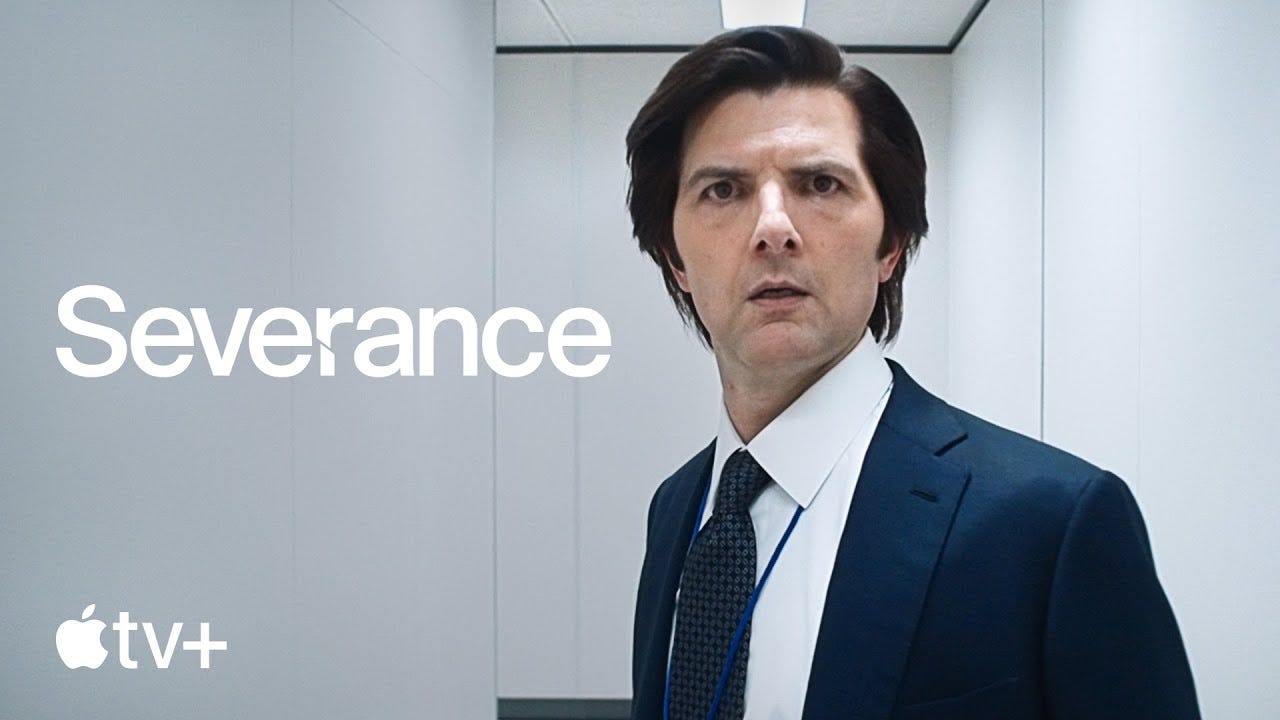
Severance is a show on Apple TV that premiered in 2022. Finally, in early 2025, season two is out. Severance follows officers workers in an environment where workers at Lumon Corporation undergo a procedure that divides them into two personalities with different memories. When outside the corporation, they cannot remember what goes on when they are in the office. When in the office, they cannot access memories of their outside self. It leads to an intriguing show that can also be disorienting as we struggle to remember they are the same person. But each is unable to access the memories of the other.
What Is Gnosticism?
Origins: Gnosticism emerged during the early centuries of the Common Era, blending Greek philosophy, Jewish mysticism, and early Christian thought.
Core Beliefs:
The material world is flawed or corrupt, often created by an ignorant or malevolent being (the Demiurge).
The true God exists beyond the material world, and humans possess a divine spark trapped within their physical bodies.
Salvation comes through gnosis (secret, spiritual knowledge), not blind faith or external rituals.
Gnosticism isn’t just a dead philosophy; it’s a profound way of looking at existence as a spiritual journey of awakening and liberation.
Why Was Gnosticism Declared Heresy?
Challenge to Church Authority: Gnosticism emphasized individual enlightenment over institutional control, undermining the Church’s role as the sole arbiter of salvation. This would not stand, so Gnosticism was driven underground.
Contradictions to Doctrine:
Gnostics rejected the idea of a single, omnipotent God who created the material world.
They saw Christ not as a savior through his crucifixion but as a teacher who brought hidden knowledge.
Persecution and Suppression: By the 4th century, the Church declared Gnosticism heretical, and many Gnostic texts were destroyed. The discovery of the Nag Hammadi library in 1945 revived interest in their ideas, offering us a glimpse into a worldview that almost vanished.
Why Gnostic Themes Are Hidden in Stories
Cultural Memory and Subversion: Gnostic ideas often challenge authority and the status quo, making them appealing to artists and writers working under systems of control. By embedding these themes in fiction, creators can explore them without direct conflict.
Timeless Questions: Gnosticism addresses universal questions:
Who am I, really?
What is the nature of reality?
How do I escape suffering?
These questions resonate across cultures and eras, making Gnostic ideas fertile ground for storytelling.
Examples in Popular Media:
The Matrix: The concept of escaping the simulated world is quintessentially Gnostic.
Snowpiercer: The train, as a closed system, reflects the oppressive nature of the material world, and the characters seek liberation.
Severance: The division of the self and the search for truth mirror Gnosticism’s focus on awakening to a higher reality.
Specific Elements of Gnosticism in Severance
1. The Duality of Worlds: In Severance, the "innie" and "outie" selves represent two distinct realities, much like the Gnostic divide between the material and spiritual realms. Like the The innies, trapped within Lumon, are unaware of their true selves, echoing the Gnostic belief in the soul’s imprisonment within the material world.
The outie voluntarily undergoes a procedure to enter the world of Lumon, like we do when we come here to this reality. There is a nondisclosure policy. No one is allowed to know much about their outie.
2. The Demiurge and Corporate Control: The Lumon Corporation functions as a modern-day Demiurge, a controlling entity that manipulates and suppresses the true nature of its workers. The oppressive hierarchy and blind worship of the Eagan family mirror Gnostic critiques of the false god’s authority. The workers are given tasks that make no sense to them. They are told they are doing mystical but important work. But they find themselves wondering what they are truly doing there. Do you ever feel that way?
3. Awakening Through Knowledge: Mark and his coworkers slowly uncover the truth about their situation, mirroring the Gnostic pursuit of gnosis, which is hidden knowledge that leads to liberation.
4. The Illusion of Reality: The severed workers’ limited perspective reflects Gnosticism’s view of the material world as an illusion, created to keep souls from recognizing their divine origin and higher purpose. In the first episode of the second season, the innies ask Mark, who has gotten a glimpse of the outside world, what wind or sunshine feels like. Their questions underscore the limited perspective of those trapped within the illusion—much like how we, in our world, have only vague ideas of what lies beyond our perceived reality.
Similarities to Plato’s Cave
The "innies" in Severance are strikingly similar to the souls in Plato’s Allegory of the Cave. Both are trapped in an artificial reality and unaware of the larger truth beyond their confinement.
In Plato’s allegory, prisoners are chained in a cave, mistaking shadows on the wall for reality, much like the innies living solely within Lumon’s carefully controlled environment, oblivious to their "outie" selves or the world outside. Just as the shadows in the cave are manipulated illusions created by puppeteers, the innies’ reality is shaped by the company’s oppressive rules and meaningless tasks, like sorting cryptic numbers.
For both, liberation comes through an often painful process of awakening—Plato’s prisoner must leave the cave and face the blinding light of truth, while the innies slowly uncover Lumon’s secrets, gaining self-awareness and questioning their reality.
Lumon functions like Plato’s puppeteers—or even the Gnostic Demiurge—an imperfect creator maintaining control over its subjects. Ultimately, both stories depict a profound struggle for truth, freedom, and the courage to escape illusion.
Why These Themes Resonate With Us
The Human Condition: Gnosticism speaks to our innate sense that something about life feels incomplete. Whether it’s discontent with societal systems, existential longing, or spiritual hunger, Gnostic themes tap into this universal unease.
The Modern Relevance of Gnosticism: In an age of corporate control (Severance), digital illusions (The Matrix), and environmental collapse (Snowpiercer), Gnostic ideas about awakening and liberation feel more relevant than ever.
Empowerment Through Knowledge: Gnosticism invites us to see ourselves as more than our roles, possessions, or circumstances, empowering us to seek inner freedom.
Why Gnosticism Can Be Freeing
Liberation from External Authority: One of the most empowering aspects of Gnosticism is its focus on personal enlightenment rather than reliance on institutions or intermediaries. Salvation and truth lie within you, not in following external dogma.
Reclaiming Your Divine Spark: Gnosticism teaches that each of us carries a divine spark, a piece of the infinite within. Recognizing this restores a sense of cosmic purpose and personal significance.
Freedom from the Illusion of Control: The Gnostic worldview sees the material world as a flawed construct, encouraging us to shift focus from external validation to inner growth. This perspective frees us from societal pressures and the "rat race" mindset.
Encouraging Individual Inquiry: Unlike many traditional religious systems that require strict adherence to rules, Gnosticism validates the seeker’s journey. It encourages questioning and self-discovery, empowering individuals to explore their own truths.
Awakening to a Higher Reality: Recognizing that the material world is not the ultimate reality provides hope and resilience, particularly in times of suffering. Gnosticism suggests that pain, while real, is part of an illusory system and can be transcended through spiritual growth.
Alignment with Modern Spirituality: Practices like mindfulness, meditation, and the search for "higher consciousness" align with Gnostic principles, making them accessible and relevant to modern audiences.
So Now What?
From ancient heresies to modern media, Gnosticism continues to whisper its truths to us. Stories like Severance and Snowpiercer remind us to question the reality we see and seek the deeper truths within ourselves. Perhaps that’s why these themes feel so timeless—the journey to awaken is as old as humanity itself. As a call to action, I encourage you to look for the "not-so-hidden" messages in our pop culture. When you're entertained, you may also be enlightened.
Gnosticism was declared heresy because it empowered individuals to seek truth on their own terms. Today, its message is more relevant than ever. Whether through ancient texts or modern media, Gnostic themes remind us that freedom begins with awakening. The world may feel like a trap, but the key to liberation lies within each of us.
p.s.- if you haven’t seen it yet, watch Snow Piercer
Hi Brian, glad to be here! I appreciate your post here and totally agree. Beyond the gnostics, I feel like other exemplars of Christian mysticism (St. John of the Cross, Evelyn Underhill, Thomas Merton) might be open to the direct experience of the divine. Most interfaith dialogue happens successfully when the mystics of their respective traditions come together. I guess it shouldn't surprise us as they are not trying to create in-groups and out-groups, or build an expensive church organization, but find the shared experience of goodness, truth and beauty immediately, directly and all together. I'll give Severance and Snowpiercer a watch with these ideas in mind.